


As I had only three weeks for this second trip, I needed to plan carefully and focus on fewer destinations. I also considered the distances between cities, as I wanted to avoid spending too much time travelling. If you look at the map of Turkey, you will notice that all these places are relatively close to one another. The longest journey was between Konya and Alanya. But, that was mainly because the bus route took a detour rather than travelling directly between the two cities.
Travelling around Turkey is easy and convenient. The country’s extensive intercity bus network connects every destination. I flew from Istanbul to Kayseri and later from Alanya back to Istanbul at the end of the trip. Between Kayseri, Aksaray, Konya and Alanya, I travelled comfortably by bus. I usually chose midday departures and arrived at the next destination in the afternoon.
A WORD ABOUT KAYSERI
You may wonder why anyone would visit Kayseri and what there is to see there. Surprisingly, not many people seem familiar with this large city in Central Anatolia. To give you some perspective, Kayseri is comparable in population and size to Belgrade.
Kayseri Airport serves as the main gateway to the world-famous Cappadocia region. Thousands of travellers pass through the city on their way to Cappadocia, yet very few actually stop to explore Kayseri itself. During the two days I spent there, it felt as though I was the only foreign tourist in the city. If you are interested in the history of Anatolia, Kayseri, alongside Konya, is one of the best places to discover the legacy of the Seljuks. While Konya was the capital of the Seljuk Sultanate of Rum, Kayseri was one of its most important and influental cities.
The city also has a rich Ottoman heritage. In addition to several beautiful Ottoman-era mosques, Kayseri features a large covered bazaar filled with countless shops and an impresive variety of goods.
MY HOTEL IN KAYSERI
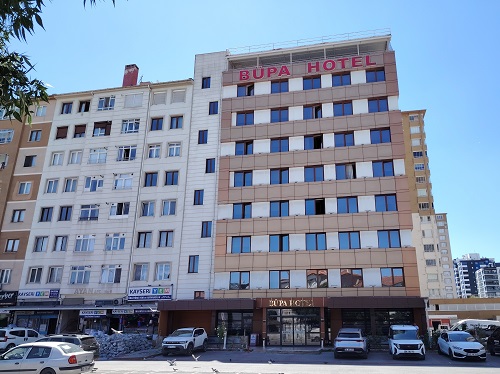
I stayed at Bupa Hotel, a four-star hotel located about a 10-minute walk from the city centre. One of the advantages of travelling beyond Istanbul is that you can often stay in much better hotels for the same price you would pay for a modest three-star hotel in Istanbul.
If you are planning to visit Kayseri, I highly recommend this hotel. The rooms are excellent, the breakfast is generous and the location is very convenient. The city centre is only a short walk away and along the route you will find numerous shops where you can buy anything you may need during your stay.
CUMHURIYET SQUARE
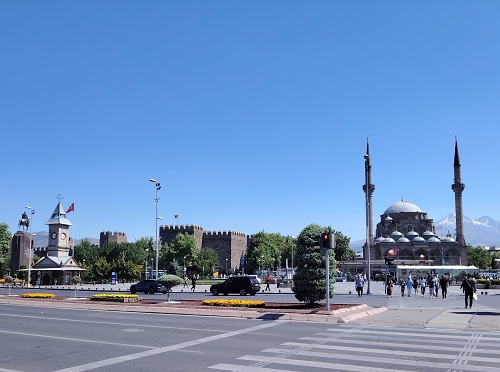
Cumhuriyet Square is the heart of Kayseri. Most of the city’s main attractions are located within walking distance of the square, making it an ideal starting point for sightseeing. The Bürüngüz Mosque, built in 1977, dominates the area and serves as its central landmark. However, several other monuments also decorate the square and add to its unique character and historical atmosphere.
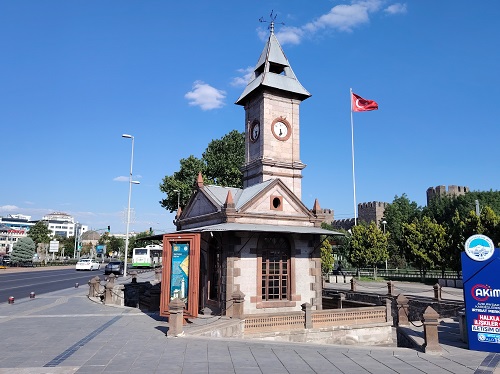
One of these landmarks is the historic Kayseri Clock Tower, an elegant Ottoman-era structure that remains one of the city’s best-known symbols.
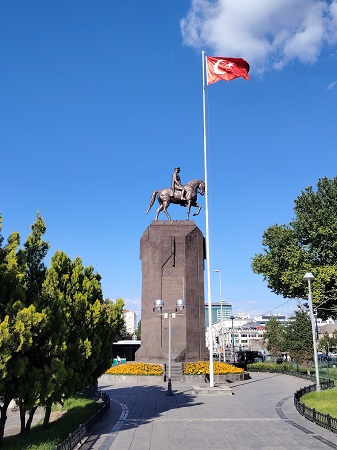
There is also the inevitable statue dedicated to the founder of modern Turkey, Mustafa Kemal Atatürk, whose monuments can be found in virtually every Turkish city and town.
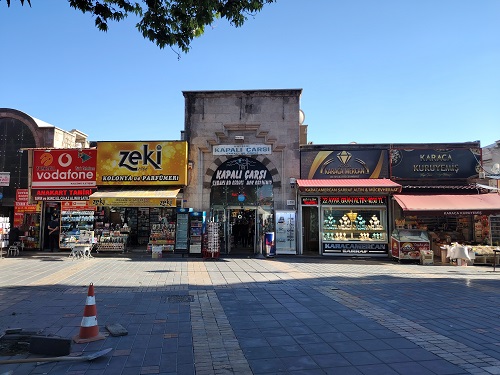
Just behind the Bürüngüz Mosque lies Kayseri Grand Bazaar, known locally as Kapalı Çarşı. This is one of the aspects that makes Turkish cities so fascinating. Athough not as large as Istanbul’s Grand Bazaar, the Kayseri Bazaar is still big, offering an astonishing variety of goods, from spices and textiles to jewellery and household items. It is the kind of place where you can easily spend half a day browsing the shops, or even longer if you are searching for something specific.
As a classic Ottoman structure, the bazaar contributes greatly to Kayseri’s charm with its colours, lively atmosphere, traditional eateries and busy crowds searching for everyday necessities. Even if you are not planning to buy anything, wandering through its narrow passages is an experience in itself.
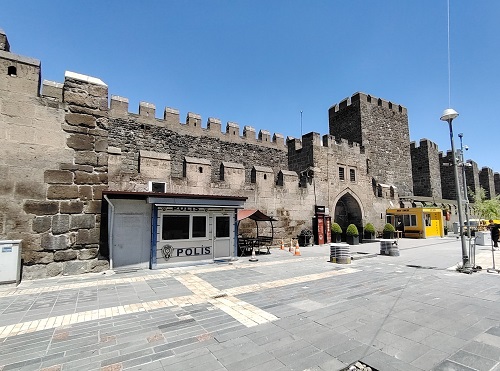
Another important landmark in the city centre is Kayseri Castle. The fortress was first mentioned during the reign of the Roman Emperor Gordian III between 238 and 244 AD. It is a magnificent structure. It also represents the historical foundation upon which the later monuments of Kayseri were built. Standing beside the castle, you can clearly sense the many historical layers that shaped the city over nearly two thousand years.
SELJUK MONUMENTS IN KAYSERI
Despite all these attractions, the main reason I visited Kayseri was to explore its Seljuk heritage. While Konya served as the capital of the Seljuk Sultanate of Rum, Kayseri was one of its key urban centres. That is why the city contains numerous Seljuk-era monuments dating back to the 12th and 13th centuries, many of which remain in excellent condition.
It is truly remarkable that many of these 800 year old mosques are still perfectly preserved and continue to function as active places of worship. Madrasas from the same period now serve different purposes, yet they too have been carefully restored and preserved. This continuity between past and present gives the city a particularly special atmosphere.
In addition to Konya, Kayseri may be one of the most important destinations in Turkey for exploring Seljuk architecture and art.
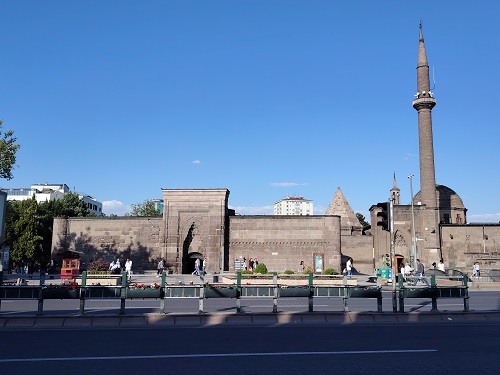
Seljuk architecture is instantly recognisable. Whether it is the Hunat Hatun Mosque or the Sahibiye Madrasa, the Seljuks left a distinctive architectural legacy throughout the city. Their buildings are characterised by monumental stone portals, geometric decorations and a unique combination of simplicity and elegance.
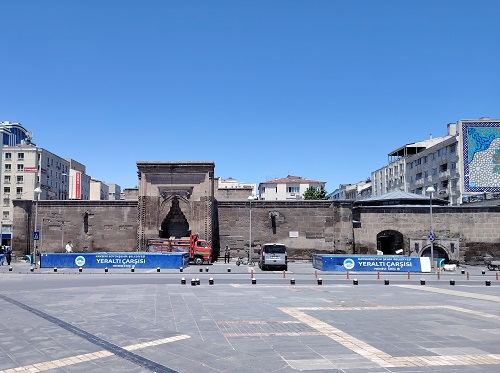
The Seljuk Sultan Giyasettin I Keyhüsrev and his sister, Gevher Nesibe Sultan, commissioned the Çifte Madrasa in 1204. Today, the building houses the Museum of Seljuk Civilisation, where you can learn more about the art, science and culture of the Seljuk period.
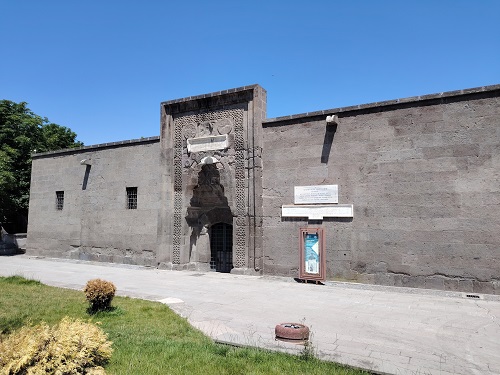
Another iconic Seljuk monument worth mentioning is the Döner Kümbet, a striking 13th century Seljuk mausoleum. It was decorated with intricate stone carvings that demonstrate the artistic sophistication of the era.
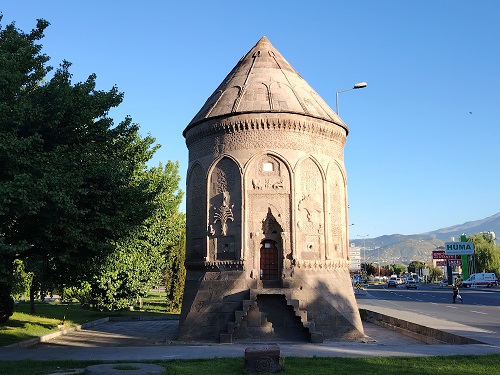
THE REST OF THE CITY
Although the Seljuk monuments are undoubtedly the city’s greatest historical treasures, Kayseri offers several other interesting sights. The city also successfully combines its ancient heritage with the rhythm of modern Turkish urban life.
One of them is the historic district featuring the beautifully restored Old Kayseri Houses. The area consists of streets lined with traditional stone houses that preserve the atmosphere of earlier centuries and provide a glimpse into the city’s Ottoman past.
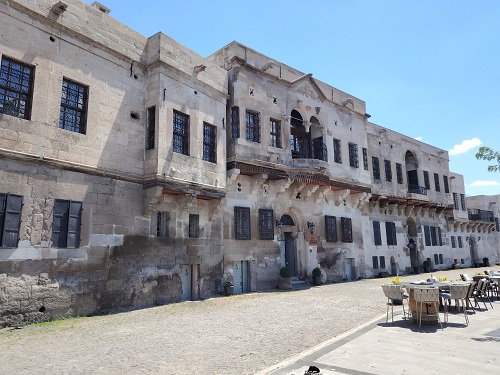
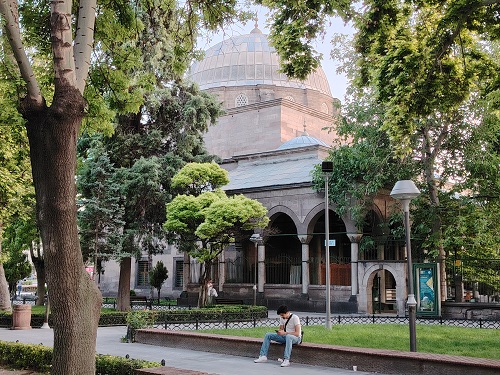
When it comes to Ottoman heritage, in addition to the Grand Bazaar mentioned earlier, the city is home to numerous Ottoman-era mosques that further enrich Kayseri’s historical landscape.
Perhaps, the most notable is the Kurşunlu Mosque, designed by the legendary imperial architect Mimar Sinan in 1573.
I spent two days in Kayseri. In the evenings, I enjoyed walking through the illuminated streets to admire the city’s monuments at night.
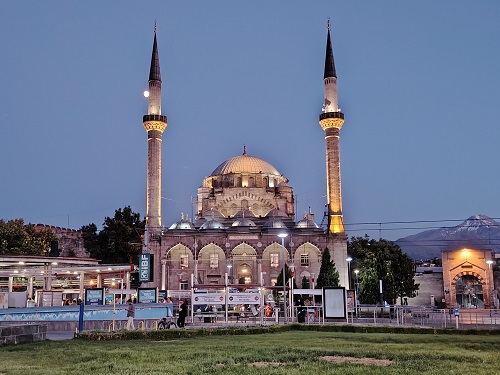
One memorable sight was the Bürüngüz Mosque glowing under the warm summer sky, with Mount Erciyes, the dormant volcano, rising in the background. The mountain dominates the skyline of the city and adds a dramatic natural setting to Kayseri’s historical scenery.
With this post, I wanted to offer a brief introduction to Kayseri. I also wanted to inspire some people to visit the city on the way to Cappadocia. Kayseri deserves far more attention than it currently receives from international visitors.
In my next posts, I will explore Kayseri’s Seljuk heritage in greater depth. These remarkable Seljuk monuments certainly deserve a dedicated article and a more comprehensive presentation, especially considering their historical and artistic importance.
In the end, I can say that I am very glad that I visited this fascinating Turkish city.
Back to Turkey