


But before we explore this magnificent Seljuk era mosque, let’s first set the historical context.
SELJUK SULTANATE OF RUM
The Seljuks played a crucial role in shaping the history of Anatolia and the wider Middle East. Although their empire existed for only a few centuries, their political, cultural and architectural influence was profound. They helped establish Turkish rule in much of Anatolia, encouraged the growth of cities and trade. They left behind a rich architectural legacy that can still be seen across modern-day Turkey. Many of the artistic and architectural traditions later associated with the Ottomans have their roots in the Seljuk period.
The Seljuk Empire was governed through a family federation system, often described as an “appanage state”. Over time, different territories of the empire were divided among members of the Seljuk dynasty, gradually leading to the emergence of semi-independent states.
One of these states was the Sultanate of Rum, a Turco-Persian kingdom that ruled much of Anatolia. It separated from the Great Seljuk Empire in 1077 and existed until 1308.
The Sultanate of Rum emerged after the Seljuk victory over the Byzantine Empire at the Battle of Manzikert in 1071. Over the following centuries, the sultanate developed into one of the most prosperous states in the region. It controlled important trade routes linking Asia and Europe. They built caravanserais to support merchants travelling across Anatolia and sponsored the construction of mosques, madrasas, hospitals and public works. Many of the finest examples of Seljuk architecture in Turkey date from this period.
Kayseri was one of the principles cites of the Sultanate of Rum. Its strategic location on major trade routes connecting Anatolia with Syria, Mesopotamia and Persia made it an important commercial centre. The wealth generated by this trade allowed local rulers and wealthy patrons to finance ambitious construction projects. As a result, Kayseri became one of the leading centres of Seljuk architecture and learning in Anatolia, a status reflected in the remarkable number of medieval monuments that survive in the city today.
HUNAT HATUN
Now, let’s take a closer look at the woman immortalised by this remarkable monument. Hunat Hatun is a name mentioned daily by people living in Kayseri, even though she died more than seven centuries ago. I am writing about her and anyone studying Seljuk history, art or architecture will inevitably come across her name.
Seljuk Sultan Alaeddin Keykubad I captured the fortress of Alanya in the early 13th century. One of the conditions of the fortress’s surrender was that the daughter of its Armenian ruler, Hunat Mahperi Hatun, would marry the Seljuk sultan.
Hunat Hatun lived in the Keykubadiye Palace in Kayseri, where she gave birth to the sultan’s son, Giyaseddin Keyhüsrev II. However, Alaeddin Keykubad also had a second wife, the daughter of the Ayyubid ruler of Egypt, Melik Adil. From this marriage, the sultan had two sons and two daugters.
In 1237, Alaeddin Keykubad I declared his middle son, Izzedin Kiliç Arslan, as his heir. Shortly afterwards, the sultan died, reportedly from poisoning. His death triggered a fierce struggle for the throne between the families of his two wives. With the support of influential viziers and emirs, Hunat Hatun’s son eventually ascended the throne. Melik Adil and her sons were killed, while her daughters were sent away from Anatolia. Some historians maintain that Hunat Hatun may have been involved in the poisoning of Alaeddin Keykubad.
HUNAT HATUN MOSQUE
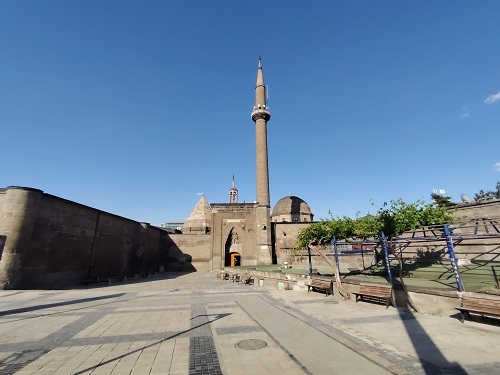
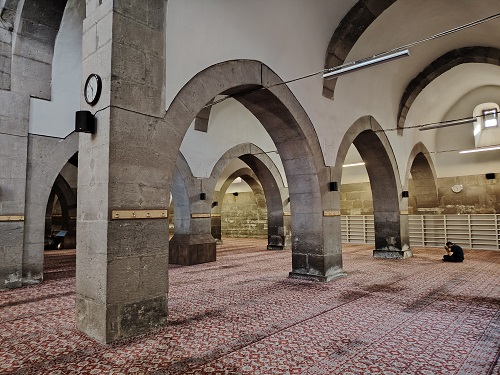
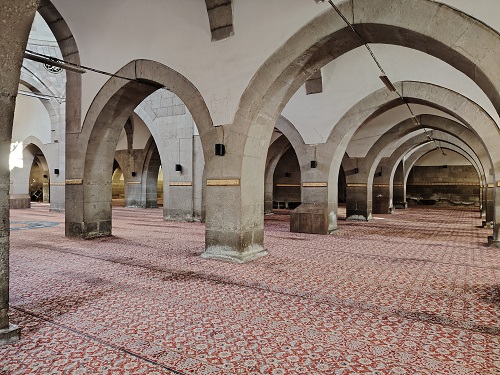
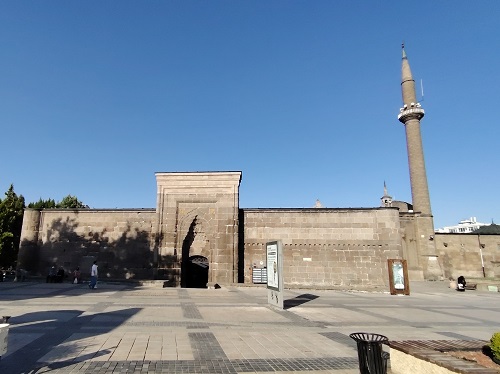
Following her husband’s suspicious death, Hunat Hatun converted to Islam. With her son becoming the new Seljuk sultan, remaining a Christian was no longer a realistic option. In 1238, she commissioned the Hunat Hatun Mosque. It was a religious and social complex that included a madrasa, a hammam that still functions today and her own tomb.
Commissioning such an impressive religious complex also helped reinforce the credibility of her conversion to Islam, particularly after the violent struggle for the throne and the deaths of Melik Adil and her sons.
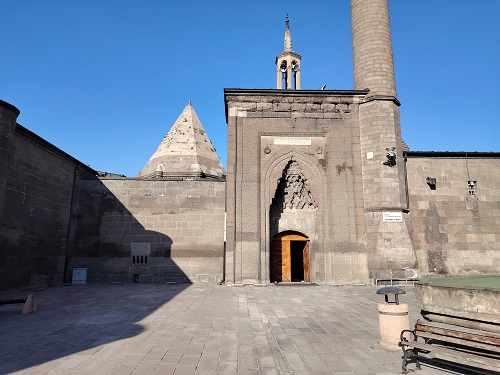
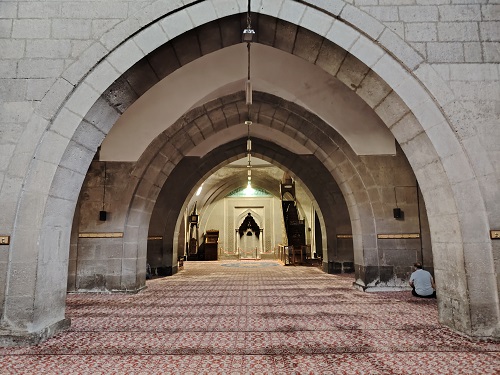
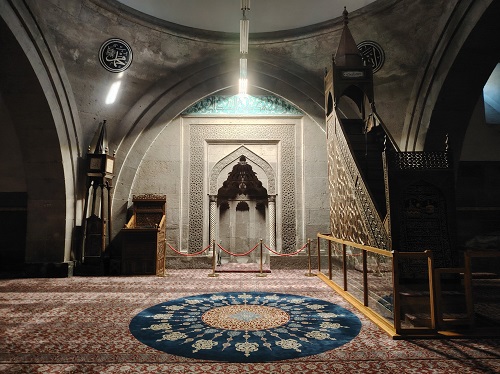
The Hunat Hatun Mosque is a superb example of Anatolian Seljuk architecture, with the elegant stone craftsmanship and harmonious design that define the period. While it is arguably the most impressive Seljuk monument in Kayseri, the former Seljuk capital of Konya is home to another remarkable monument associated with Alaeddin Keykubad, the Alaeddin Mosque, one of the most fascinating examples of Seljuk architecture in Turkey.
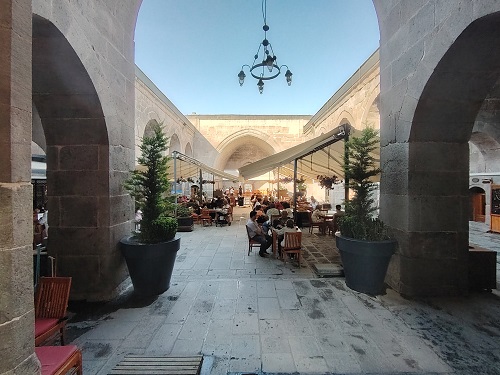
As you can see in the photo below, the madrasa now houses coffee shops and other small businesses. It is a peaceful courtyard that offers a welcome escape from the Kayseri’s busy city centre.
If the Hunat Hatun Mosque was the only Seljuk monument in Kayseri, it would still be well worth visiting. This magnificent historical structure, now nearly 800 years old, continues to serve its original purpose as a place of worship.
However, it is only one of many surviving Seljuk monuments in Kayseri. Together, those remarkable buildings form the city’s historic heart and make Kayseri one of the best destinations in Turkey for anyone interested in Seljuk history, architecture and cultural heritage.
Back to Turkey