


SELJUK EMPIRE
But first, let’s set the stage for this article. Many people may not be familiar with the Seljuk civilisation. Having at least a basic understanding of its history helps place these remarkable monuments into their proper historical context. A little historical knowledge can completely transform the way we experience a destination, allowing us to appreciate its cultural significance on a much deeper level.
The Seljuks played a crucial role in shaping the history of Anatolia and the wider Middle East. Although their empire existed for only a few centuries, their political, cultural and architectural influence was profound. They helped establish Turkish rule in much of Anatolia, encouraged the growth of cities and trade. They left behind a rich architectural legacy that can still be seen across modern-day Turkey. Many of the artistic and architectural traditions later associated with the Ottomans have their roots in the Seljuk period.
The history of the Seljuk Empire is complex but, for the purpose of this article, it is sufficient to say that it was a major Turco-Persian empire. At its height, it controlled territories that today include Turkey, Iran and parts of Syria, Iraq, Armenia, Azerbaijan, Turkmenistan and Afghanistan. Established in 1037, the empire lasted until the mid-13th century when Mongol invasions led to its fragmentation into several emirates. One of these emirates would eventually evolve into the Ottoman Empire.
The Seljuk Empire existed long before the rise of the Ottoman Empire and the two states were distinct political entities. As a result, the extensive Seljuk heritage found throughout Anatolia represents a unique chapter of Turkish and Middle Eastern history. Today, these monuments stand as enduring testaments to the achievements of Seljuk civilisation.
SELJUK SULTANATE OF RUM
The Seljuk Empire was governed through a family federation system, often described as an “appanage state”. Over time, different territories of the empire were divided among members of the Seljuk dynasty, gradually leading to the emergence of semi-independent states.
One of these states was the Sultanate of Rum, a Turco-Persian kingdom that ruled much of Anatolia. It separated from the Great Seljuk Empire in 1077 and existed until 1308. Its first capital was Iznik, followed later by Konya, which became the political and cultural centre of the sultanate.
The Sultanate of Rum emerged after the Seljuk victory over the Byzantine Empire at the Battle of Manzikert in 1071. Over the following centuries, the sultanate developed into one of the most prosperous states in the region. It controlled important trade routes linking Asia and Europe. They built caravanserais to support merchants travelling across Anatolia and sponsored the construction of mosques, madrasas, hospitals and public works. Many of the finest examples of Seljuk architecture in Turkey date from this period.
Kayseri was one of the principles cites of the Sultanate of Rum. Its strategic location on major trade routes connecting Anatolia with Syria, Mesopotamia and Persia made it an important commercial centre. The wealth generated by this trade allowed local rulers and wealthy patrons to finance ambitious construction projects. As a result, Kayseri became one of the leading centres of Seljuk architecture and learning in Anatolia, a status reflected in the remarkable number of medieval monuments that survive in the city today.
SELJUK MONUMENTS IN KAYSERI
Seljuk monuments in Kayseri are numerous and include mosques, madrasas and mausoleums. In this post, I will focus on four major Seljuk-era mosques. There may be additional examples throughout the city, although I tried to visit as many as I could identify. Remarkably, all of these mosques continue to function as places of worship centuries after their construction.
The madrasas, on the other hand, now serve different purposes. As theological schools, they are no longer required in their original form, as modern educational facilities have taken over that role. Nevertheless, these historic buildings remain important parts of Kayseri’s architectural heritage.
Finally, I have selected three notable Seljuk-era tombs, although there are several others scattered across the city. These may be of particular interest to visitors who wish to explore the history of the Seljuks in greater depth.
SELJUK MOSQUES
Perhaps the most striking Seljuk mosque in Kayseri is the Hunat Hatun Mosque. This magnificent structure dominates the city centre and remains on of Kayseri’s most impressive historical landmarks. Hunat Hatun commissioned its construction in 1238. In fact, it was part of a larger complex that included a mosque, madrasa, mausoleum and hammam.
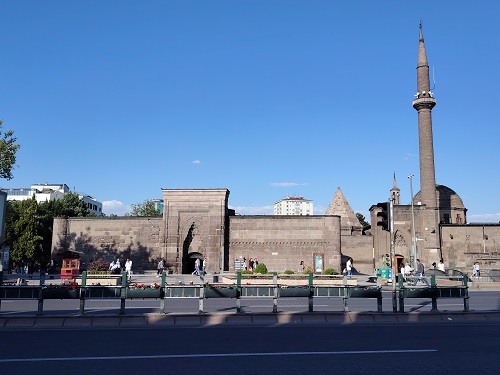
Equally important is the Kayseri Grand Mosque, located in the heart of the city’s historic district. Commissioned by Melik Mehmet Gazi, it was built between 1134 and 1143. Nearly 900 years later, this remarkable structure continues to serve as an active mosque.
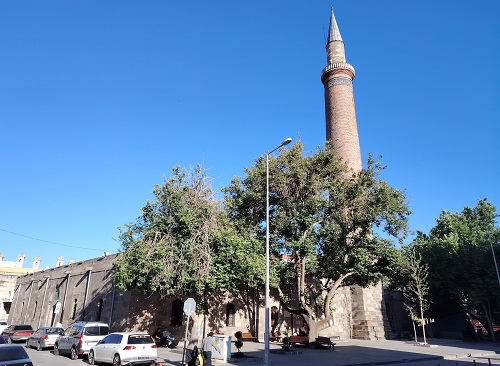
The Haci Kiliç Mosque was built in 1249 during the reign of the Seljuk Sultan Izzeddin Keykavus II. Almost 800 years old, it remains a functioning place of worship and an important example of Seljuk architecture in Kayseri.
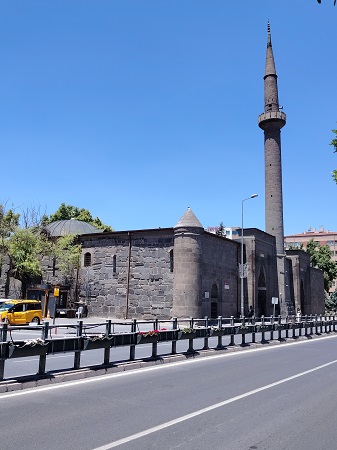
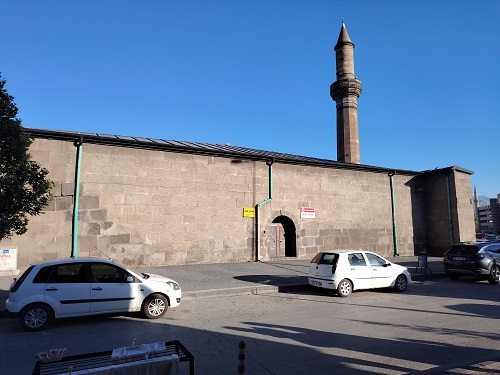
The Han Mosque, constructed by the Seljuks in the 13th century, originally served as a caravanserai. However, the Ottomans converted into a mosque, giving it a unique place among Kayseri’s historical monuments.
SELJUK MADRASAS
Apart from the Han Mosque, the other three mosque mentioned above were built as part of larger complexes that included a madrasa and other typical Seljuk architectural elements. However, the Seljuks also constructed dedicated standalone theological schools, many of which survive in Kayseri today. Although their functions have changed, they remain integral part of the city’s valuable Seljuk heritage.
Due to its prominent location on the city’s main square, the Sahabiye Madrasa is perhaps one of the most recognisable Seljuk monuments in Kayseri.
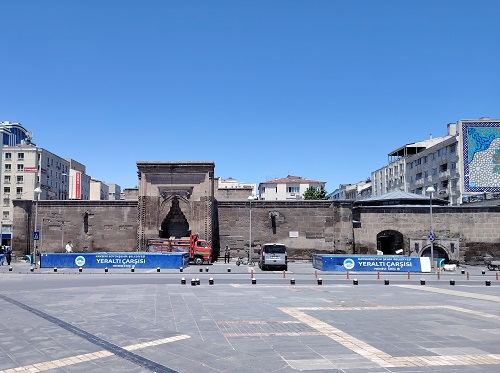
Sahib Ata Fahreddin Ali, son of the Seljuk vizier Hüseyin, commissioned the construction of the Sahabiye Madrasa in 1267, during the reign of Sultan Giyaseddin Keyhusrev III.
The Kayseri Metropolitan Municipality restored and reopened the building to the public. Today, it no longer functions as an educational institution. Instead, visitors will find small business and coffee shops within its walls. Nevertheless, it retains both its architectural beauty and historical importance.
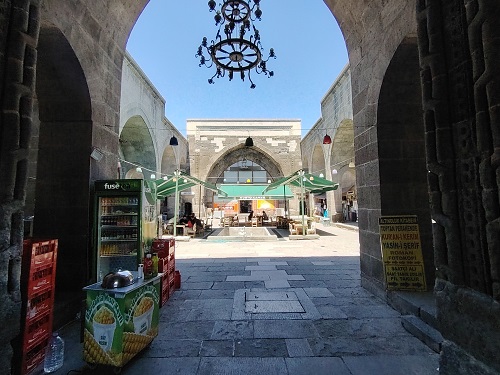
According to the wishes of his sister Gevher Nesibe, who died after an illness, Sultan Giyaseddin Keyhusrev I commissioned the construction of the Gevher Nesibe Madrasa in 1204. The complex included a medical school, a hospital and a mental health facility, making it the first medical madrasa and hospital in Anatolia.
The institution represented a remarkable achievement for its time. Medical students received both theoretical and practical training, while patients were treated within the same complex. Historians often regard it as one of the earliest examples of an integrated medical education and healthcare institution in the medieval Islamic world.
Today, this historic complex houses the Museum of Seljuk Civilisation.
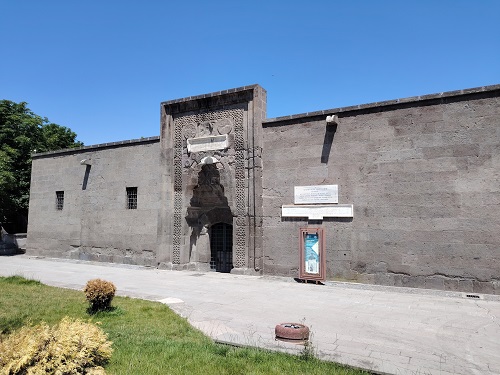
The Hatuniye Madrasa is one of the notable works of the Dulkadiroğlu Principality, which briefly ruled Kayseri and the surrounding area. It is also popularly known as the Şamiler Madrasa.
The building was constructed in 1432 by Nasiruddin Mehmed Bey of the Dulkadiroğlu dynasty for his wife, Hatice Hatun.
The madrasa was closed during my visit to Kayseri, so I was unable to see its current use or whether it contains any exhibitions or displays.
SELJUK TOMBS
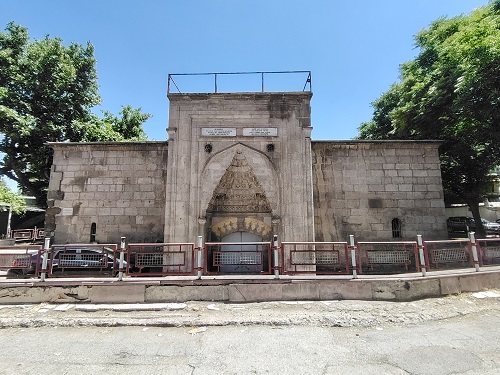
Although there are many Seljuk-era tombs in Kayseri, I have selected three of the most visually impressive examples for this post. Together, they contribute significantly to the architectural and historical richness of the city. While the stories of the individuals buried within them may interest historians, I believe it is equally important to appreciate the architectural achievement and artistic legacy of the Seljuk civilisation itself.
Located next to the Han Mosque, the Emir Han Tomb was built in 1188 by Cemaleddin Tanrıvermiş.
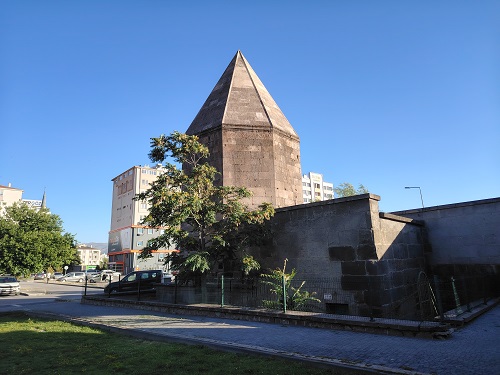
The Alaca Tomb dates back to the 1280s and remains one of the city’s notable Seljuk-era monuments.
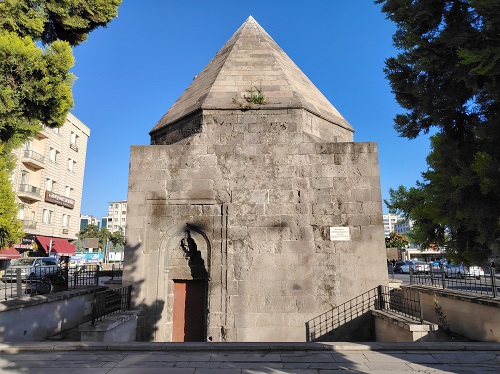
The Döner Kümbet, a striking 13th century Seljuk mausoleum, was decorated with intricate stone carvings that demonstrate the artistic sophistication of the Seljuk era.
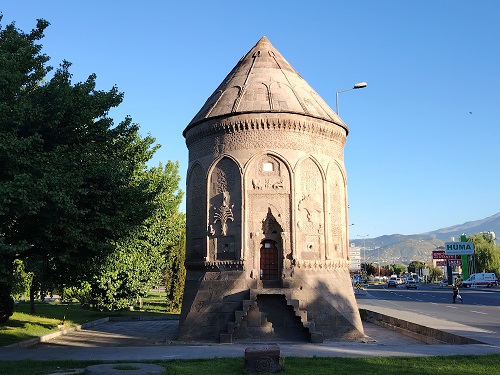
Kayseri is exceptionally rich in Seljuk-era architecture. In this post, I have highlighted some of the most important Seljuk monuments that visitors can explore when visiting this historic Turkish city.
Although people regard Konya as the main centre of Seljuk heritage in Turkey, Kayseri offers an equally fascinating glimpse into the world of the Sultanate of Rum. The city’s mosques, madrasas and mausoleums reveal the architectural sophistication of the Seljuks, as well as the economic and cultural prosperity that Anatolia experienced during their rule.
In future posts, I will write about some of these magnificent buildings in greater detail. As outstanding examples of Seljuk architecture and artistic achievement, they certainly deserve individual attention.
Back to Turkey