


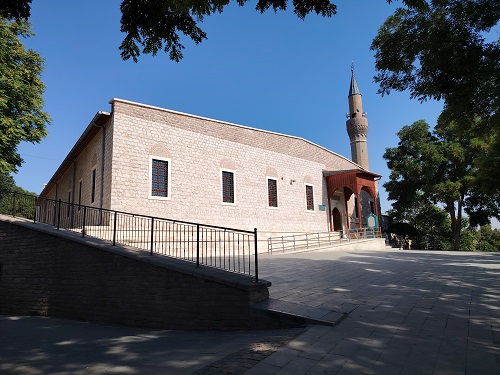
SELJUK SULTANATE OF RUM
The Seljuk Empire was governed through a family federation system, often described as an “appanage state”. Over time, different territories of the empire were divided among members of the Seljuk dynasty, gradually leading to the emergence of semi-independent states.
One of these states was the Sultanate of Rum, a Turco-Persian kingdom that ruled much of Anatolia. It separated from the Great Seljuk Empire in 1077 and existed until 1308. Its first capital was Iznik, followed later by Konya, which became the political and cultural centre of the sultanate.
The Sultanate of Rum emerged after the Seljuk victory over the Byzantine Empire at the Battle of Manzikert in 1071. Over the following centuries, the sultanate developed into one of the most prosperous states in the region. It controlled important trade routes linking Asia and Europe. They built caravanserais to support merchants travelling across Anatolia and sponsored the construction of mosques, madrasas, hospitals and public works. Many of the finest examples of Seljuk architecture in Turkey date from this period.
ALAEDDIN MOSQUE
The Alaeddin Mosque is one of the most important examples of Seljuk architecture in Konya. It is also one of the city’s most significant historical landmarks, alongside the Mevlana Museum and the Selimiye Mosque.
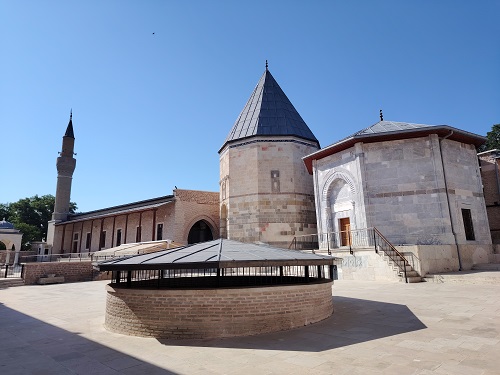
The mosque stands on top of Alaeddin Hill, overlooking the surrounding city centre. Its construction started during the 12th century and continued through the reigns of several Seljuk sultans. Major works were completed during the reign of Sultan Alaeddin Keykubad I, in the early 13th century.
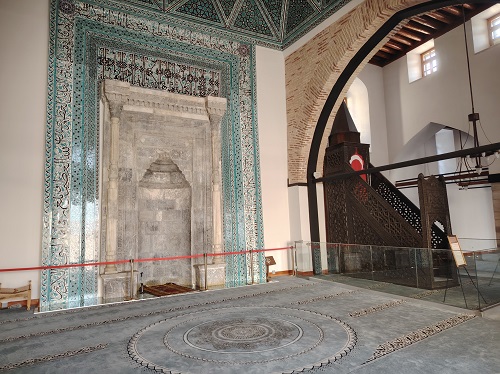
Like many early Anatolian Turkish monuments, the mosque was built on a site with an earlier Byzantine history, after the Seljuk conquest of Konya. Over time, the structure was expanded and transformed into one of the most important religious and political centres of the Seljuk capital.
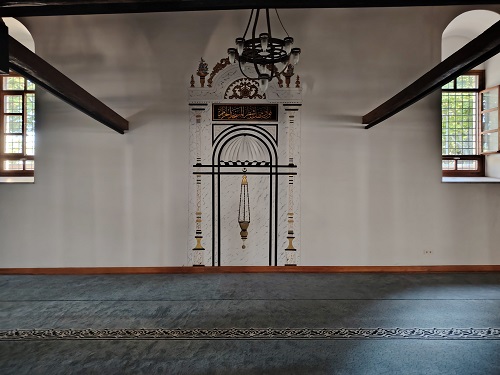
The architectural style and interior of the Alaeddin Mosque are strikingly different from the more familiar style of later Ottoman mosques. The building has a relatively plain exterior, while its architectural character reflects the earlier traditions of Seljuk design.
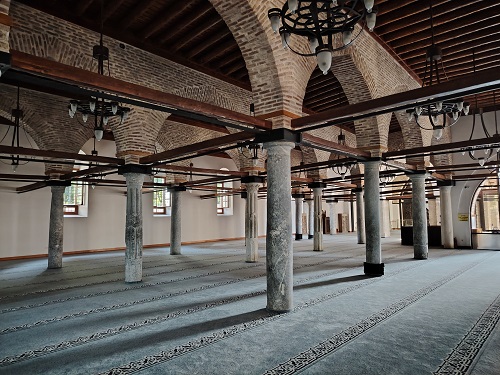
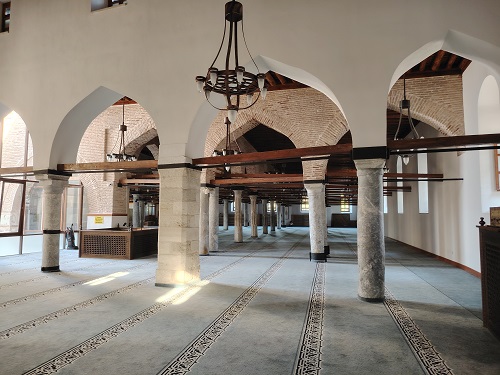
Inside, the simple white walls create a very different atmosphere from the richly decorated interiors of many Ottoman-era mosques. One of the most distinctive features is the use of columns and reused architectural elements, which give the interior its characteristic Seljuk appearance. The combination of different columns and capitals also reflects the long and complex history of the building.
Some of the earliest Ottoman mosques in Bursa show architectural similarities to Seljuk buildings, particularly in their use of more compact, square based plans. However, their interiors are often far more elaborate. Good examples are the Green Mosque, the Muradiye Mosque and the Grand Mosque. They all combine early Ottoman architectural forms with increasingly rich interior decoration.
MAUSOLEUM OF THE SELJUK SULTANS OF RUM
The Alaeddin Mosque complex also includes the Mausoleum of the Seljuk Sultans of Rum, one of the most important dynastic burial sites of the Anatolian Seljuk period.
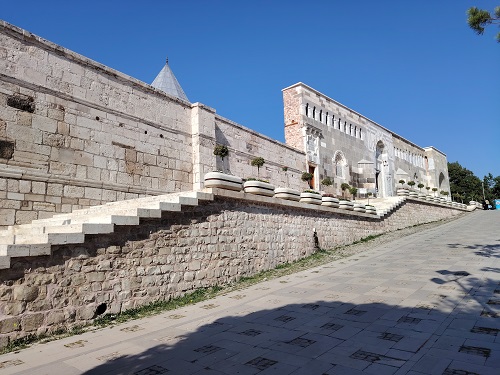
This makes Alaeddin Hill one of the most important historical sites in Konya. It is also an important place for understanding the history of the Seljuk Sultanate of Rum, which ruled much of Anatolia between the 11th and 13th centuries.
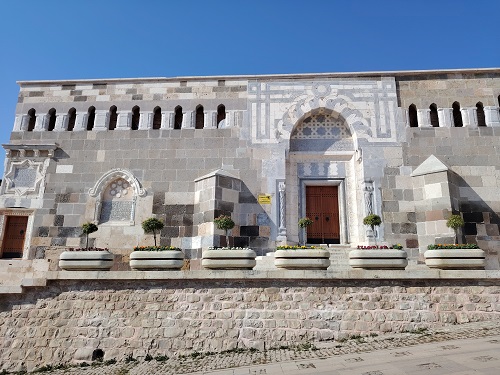
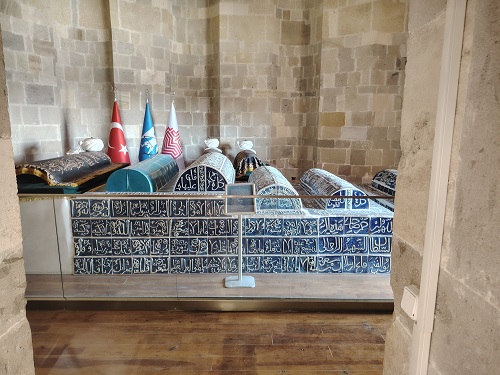
The mausoleum is traditionally associates with Sultan Kiliç Arlsan II and it contains the tomb and sarcophagi of eight Seljuk Sultans.
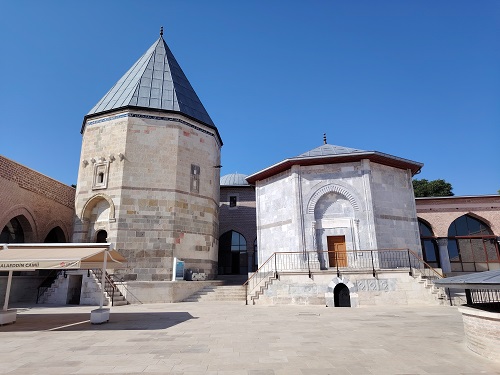
According to the Konya Governorate and Selçuklu District Governorate, the eight Seljuk Sultans of Rum listed as buried in the mausoleum, in the courtyard of Alaeddin Mosque, are – Mesud I, Kiliç Arslan II, Süleyman Shah II, Kaykhusraw I, Alaeddin Keykubad I, Kaykushraw II, Kiliç Arslan IV and Kaykhusraw III.
SULTAN ALAEDDIN KEYKUBAD
Although the exact date is uncertain, Sultan Alaeddin Keykubad may have been born in 1190. When his father, Giyaseddin Keyhüsrev, ascended to the Seljuk throne in 1205, he appointed Keykubad as the Malik (prince) of Tokat. During his six year governorship, Keykubad gained valuable experience in state administration.
After the death of his father in 1211, his elder brother, Izzeddin Keykavus, was declared Sultan as the eldest son. Keykubad did not accept his brother’s accession and besieged Kayseri. However, he was unsuccessful and withdrew to Ankara Castle. When his supplies run out, he surrendered on the condition that neither he nor the citizens of Ankara would be harmed. He was then imprisoned in Masara Castle near Malatya in 1212.
Following the death of Keykavus, Keykubad ascended to the throne in 1220. During his reign, he built the Kubad Abad Palace near Lake Beyşehir and the Keykubadiye Palace near Lake Şeker in Kayseri. Seljuk rulers established caravanserais in rural areas to allow caravans to travel safely and comfortably. Keykubad commissioned two magnificent caravanserais. One on the Konya – Aksaray route and the other on the Kayseri – Sivas route, both known as Sultan Caravanserais.
On the 31st May 1237, while preparing for a military expedition against Ayyubids, he hosted commanders and ambassadros at a feast in Kayseri. He later died, reportedly from poisoning. His reign is regarded as one of the most powerful periods of the Seljuk Sultanate. The borders of his state extended eastward toward the Euphrates and to the shores of the Aras River and Lake Van.
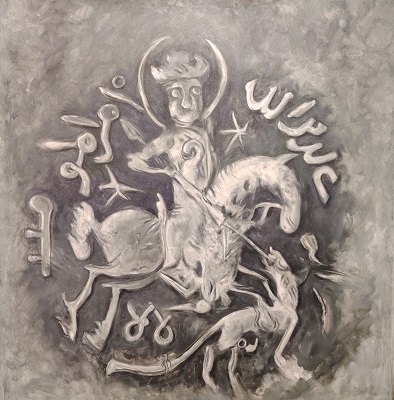
He is referred to by the title “As-Sultan al-A’zam” (the Great Sultan) on coins and inscriptions.
SELJUK CIVILISATION
Konya offers a remarkable opportunity to explore the history of the Seljuk Sultanate of Rum and its lasting influence on Anatolia. It is included in the Tentative List of UNESCO World Heritage Sites as the capital of the Seljuk Civilisation.
Outside Konya, the enormous Seljuk legacy stretches across Anatolia and into Iran. Cities such as Diyarbakir and Kayseri are home to important Seljuk era monuments and historic buildings. The same is true of many other territories that were once part of the Seljuk Empire.
Back to Turkey