


While Rumi may historically have been less familiar to many people in the Western world than he is today, his spiritual and literally legacy has had an enormous influence across the Islamic world. Comparisons with literary figures such as Dante or Shakespeare are, of course, subjective. But they reflect the extraordinary importance and enduring legacy of his poetry.
Rumi’s poetry explores love, longing, the human soul and the search for the divine.
MEVLEVI ORDER
He was deeply associated with the Sufi tradition of sama, in which poetry and music could form part of a spiritual experience. His teachings and the community that developed around them later inspired the Mevlevi Order, which was organised and developed by his followers and descendants, particularly his son Sultan Walad.
The Mevlevi tradition later became famous for the Sema ceremony, performed by the dervishes, more popularly known as the Whirling Dervishes. However, the elaborate form of the ceremony developed over time and should not simply be understood as something created by Rumi himself.
CHELEBI CHAMBER
In the Mevleviyeh, those who descend from Mevlana Jalal al-Din Rumi are traditionally called chelebi. The term therefore became closely associated with Mevlana’s family and spiritual lineage. The office representing Mevlana is known an Chelebilik and the chelebi who serves in this position is called Makam Chelebisi (Chelebi of the Post) or Chelebi Efendi (Master Chelebi). The position held great spiritual importance within the Mevlevi tradition as it represented the continuation of Mevlana’s lineage and authority.
However, the word chelebi was also used more broadly as a title for noble, courteous, elegant and wise people. During the early Ottoman period, it was also used for members of the Ottoman dynasty, particularly Ottoman princes. Thus, the word carried meanings that extended beyond the Mevlevi tradition and was associated with refinement, education and distinguished character.
The Chelebi Efendis, who were regarded as the spiritual successors of Mevlana within the Mevlevi tradition, played an important role in preserving the spiritual lineage of the order. They also had and important role in appointing or approving their successors and in maintaining continuity within the Mevleviyeh.
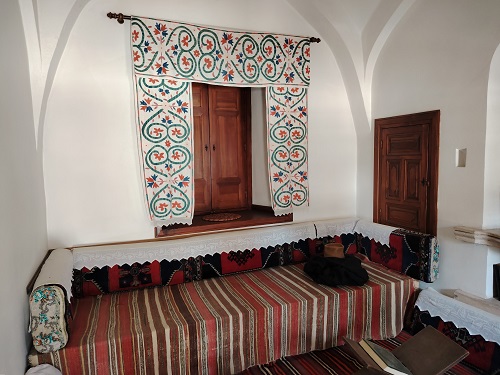
HÜCRENIŞIN
In the Mevleviyeh, a dervish who completed the traditional 1001 day period of initiation and service could recive the title of dede and, when appointed to a cell, become a hücrenişin (one who resides in a cell). The 1001 day period was not simply a measure of time. It represented a demanding process of service, discipline, patience and spiritual education. Dervishes in training were known as nevniyaz.
During the training, they performed a variety of practical services in the matbah (kitchen), including running errands, shopping, cleaning and tending the lamps. After completing their period of service and receiving the necessary approval, a nevniyaz could be informed that a cell had been assigned to him.
On that night, the nevniyaz performed ablution, ended his matbah service, put on his dervish clothing and sat on the matbah postnişin’s sheepskin. After dining in the matbah, prayers were performed and an eighten-armed girandola was lit. The nevniyaz was then brought to the chamber prepared with a gülbank (a ritual prayer or blessing) recited by Aşçı Dede. This ceremony marked an important stage in the dervish’s spiritual jouney and he then became a hücrenişin.
The dervish to whom a cell was granted then undertook the discipline of cell life. For the first three days, he did not leave the cell except for basic needs and, for the following eighteen days, he remained within the lodge as part of this period of spiritual discipline. These practices emphasised solitude, patience, self-control and devotion. Afterward, the Meydanci Dede led the new dervish to the sheikh. From this point onward, the nevniyaz was recognised as a Mevlevi dede and could continue his spiritual and intellectual development within the lodge.
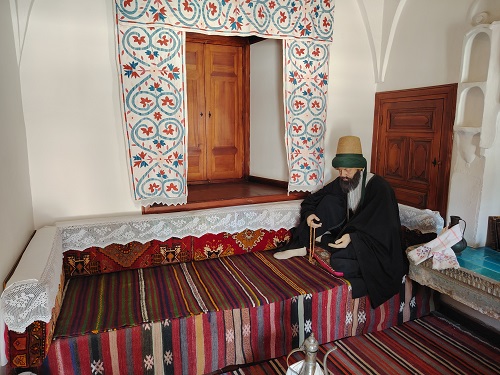
AŞÇI DEDE CHAMBER
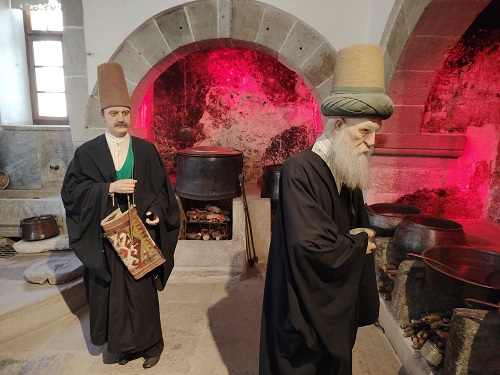
The Aşçı Dede was one of the most important officials of the Mevlevi lodge. The title literally refers to the person responsible for the kitchen. However, the matbah had a much deeper significance in Mevlevi life. It was a place where food was prepared, but also an important centre of training, discipline and spiritual education. Throughout the history of the Mevleviyeh, the Aşçı Dede played a central role in educating dervishes and contributing to their spiritual development.
The Aşçı Dede held the highest administrative rank in the lodge after the sheikh. He was responsible for maintaining the order of the matbah and overseeing many aspects of lodge life. Depending on the lodge and historical period, his responsibilities could also include supervising provisions. He managed aspects of lodge’s resources and oversaw the distribution of allowances and other forms of support to dervishes. His position combined practical responsibility with an important spiritual and educational role.
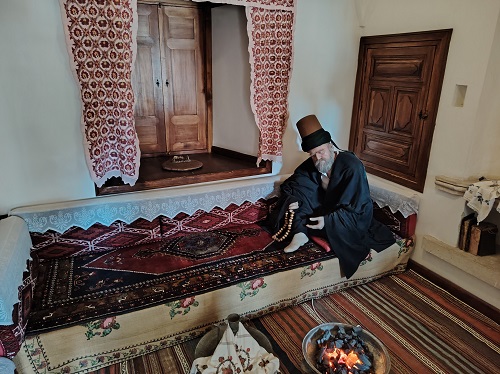
The Aşçı Dede would say to the can (soul or spirit), who had spent three days on the saka post: “So, you have witnessed and performed the prayer, invocation, service, discipline and challenges that pertain to the Mevleviyeh. These things require patience and tolerance. Whoever treats you badly, do not retaliate. Never lay a hand on anyone, nor speak against anyone. Accept everything. Be patient and show tolerance toward every difficulty and suffering sent by the Beloved. Pray, serve and remember God. If you accept this path of your own free will, we will accept you with all your deficiencies and flaws.”
This reflects some of the central values of Mevlevi spiritual training – patience, humility, tolerance, service, self-discipline and devotion. The emphasis was on learning religious or artistic subjects. Also, on transforming one’s character through everyday service and spiritual practice.
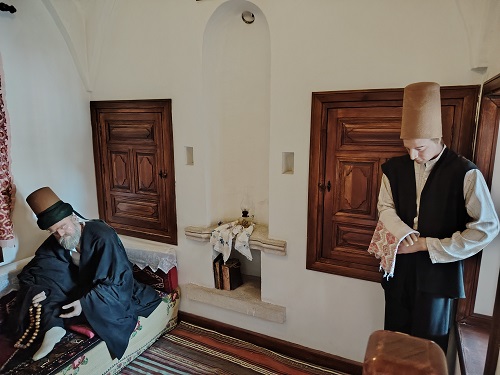
DERVISH LODGE
There is also a section within the museum where visitors can see scenes depicting the daily life of Mevlevi dervishes and their activities within the lodge.
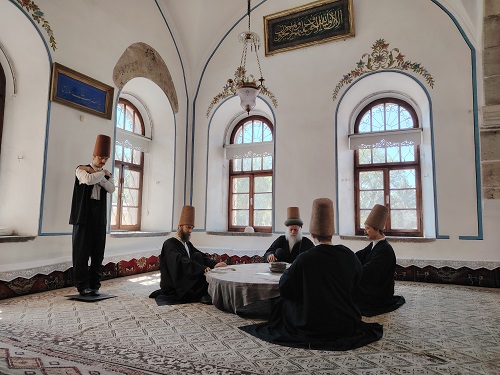
These displays offer visitors a glimpse into the world of the Mevleviyeh.
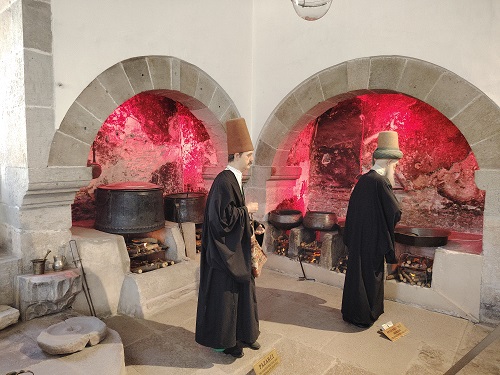
They also illustrate how service, education, music, art, prayer and spiritual discipline were woven into everyday life in a Mevlevi lodge.
I am glad that I visited the Mevlana Museum in Konya. It inspired me to learn more about Rumi, the Mevlevi Order and the Whirling Dervishes. I knew almost nothing about these subjects before my first visit to Konya.
If the Mevlana Museum were the only thing to see in Konya, it would still be worth visiting. It is a magnificent and deeply meaningful place, especially when you understand its history, symbolism and spiritual significance. Or, perhaps, I should say Rumi’s significance.
I also believe that anyone travelling near Konya should make an effort and visit this remarkable and precious place.
Back to Turkey