


Having served as an imperial city for nearly 1600 years, Istanbul has a lot of historic monuments. There is a lot to see and it takes both time and effort to properly understand the layers of history embedded in the city. Behind every historic structure lies a story, commissioned by someone who was, at the time, a significant and influential historical figure.
Certainly, there is no need to learn or know absolutely everything. I don’t think that’s possible even for people who permanently reside in Istanbul. The city is simply too vast and its history too complex. However, having a deeper and more informed understanding helps you place what you see into its proper historical context. This added awareness makes the city far more engaging and rewarding. It allows you to almost trace its gradual transformation from a Christian Orthodox imperial capital into an Islamic centre over the centuries.
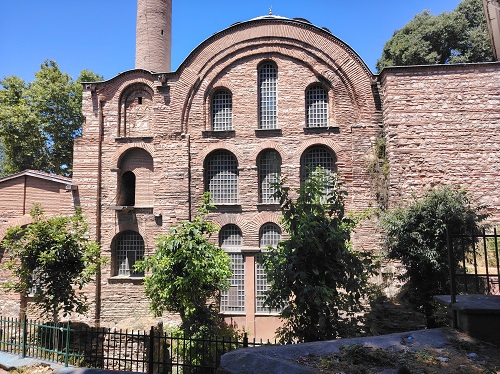
THEOTOKOS KYRIOTISSA
The Theotokos Kyritossa suffered a fate similar to that of Hagia Sophia. Fatih Sultan Mehmed converted it into a mosque immediately after the conquest of Constantinople in 1453, marking a new chapter in the building’s long history.
He granted it to the Kalendari dervishes, who used the structure as their Sufi lodge and spiritual centre. This later function explains the building’s Turkish name – Kalenderhane Camii or Kalenderhane Mosque, which it still bears today,
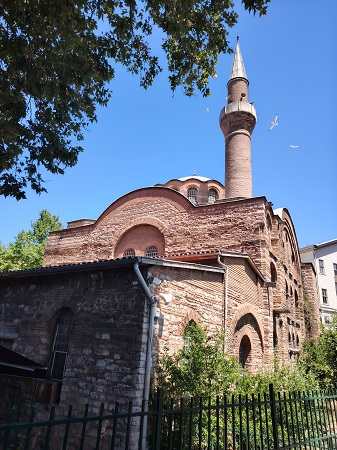
As soon as you enter the Theotokos Kyritiossa, it becomes evident that it was originally built as a church. Its architectural language is unmistakable and stands in sharp contract to later Ottoman mosques. The proportions, layout and structural elements clearly reflect Byzantine design principles.
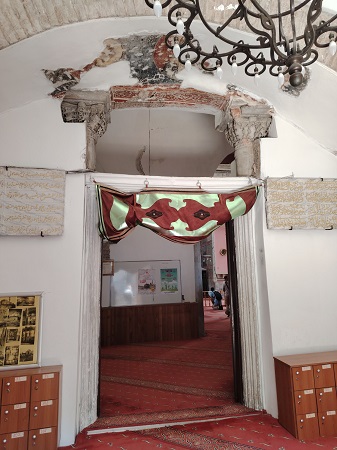
Most of the structure that we see today dates back to the 12th century. However, archaeological and architectural evidence shows that some part of the building are considerably older, pointing to an even longer and more complex construction history.
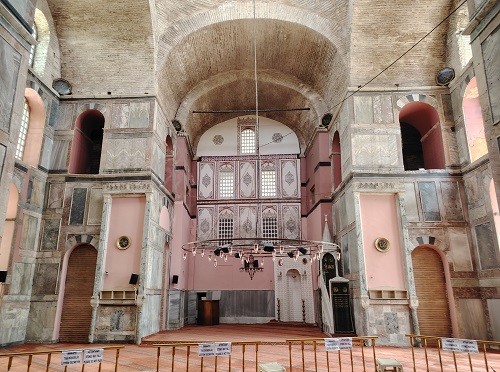
During the Latin occupation of Constantinople, the church took on yet another role. It served as a Roman Catholic place of worship for the Franciscan community, reflecting the shifting religious and political realities of the city during that turbulent period.
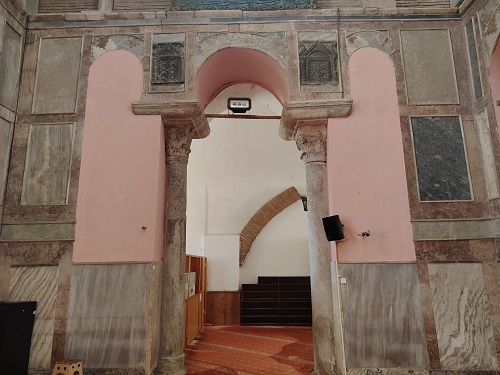
KALENDERHANE MOSQUE
This Byzantine church has now been a mosque for many centuries, far longer than it functioned as a church.
I often find myself wondering whether the many faithful Muslims who prayed inside of this former church over the years perceived it solely as a mosque or whether they sensed, however faintly, that they were praying to Allah within the structure originally built for Christian worship. If such a feeling existed, how does one reconcile the apparent contradiction of Islamic prayer taking place within a Christian architectural framework?
The same question naturally applies to all former Byzantine churches in the city that now function as mosques. Or, perhaps, people simply do not dwell on these thoughts at all. Perhaps, for them, it is a mosque regardless of its long and glorious past.
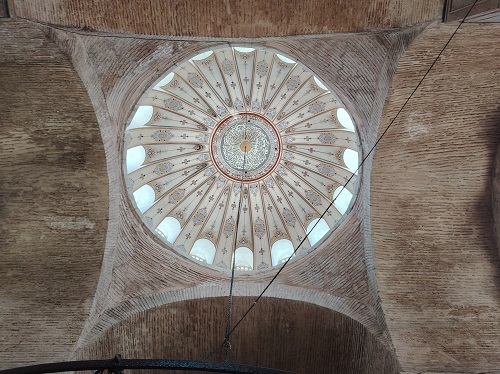
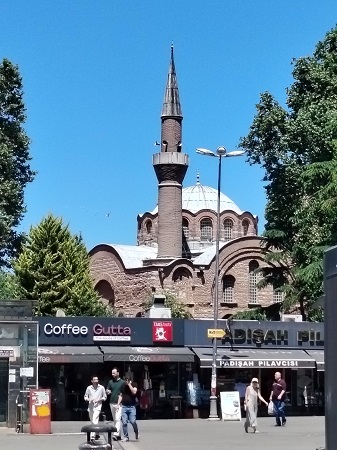
In the photo below, you can see the Theotokos Kyriotissa from a road that runs between the Bayezid Mosque and the Şehzade Mosque. I don’t know how many times I passed by this building in the past without giving it much thought. With so many mosques scattered throughout the city, it is easy to become desensitised and assume it is just another one among countless others.
Yet, if you look closely, even from a distance, you can recognise that it was once a Christian Orthodox church. Its architecture clearly reveals its true origin to those who take the time to observe.
If you are in Istanbul and happen to pass nearby, make a small detour and visit this magnificent structure. It is a true gem within the city’s vast Byzantine heritage. It is also a powerful reminder of the many historical layers that continue to coexist in Istanbul today.
Back to Turkey