


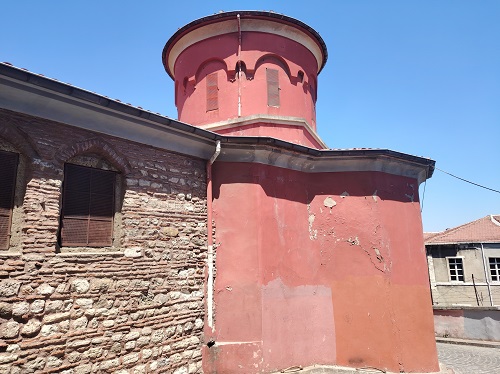
All other Byzantine churches function as mosques today, even those that were museums until very recently.
Constantinople was the capital of the Byzantine Empire for nearly 1000 years. As a result, the Byzantine legacy is still very visible across the city. It includes the structures that I mention in this post.
Above all, Hagia Sophia stands as Istanbul’s most famous historic site worldwide. It is also the city’s most visited tourist attraction, surpassing even the major Ottoman era landmarks. Perhaps the Blue Mosque and Topkapi Palace receive similar numbers, but only because they are located so close to Hagia Sophia and visitors tend to see all three together.
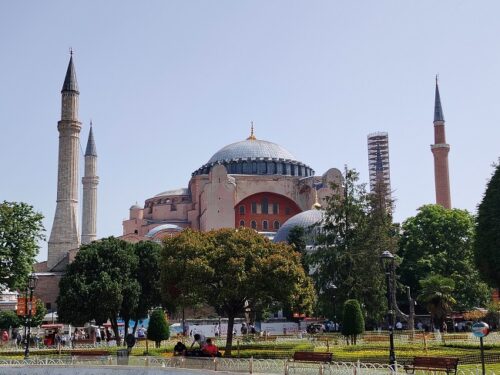
HAGIA SOPHIA
Built in 537, Hagia Sophia served as an Orthodox church for 916 years until the conquest of Constantinople in 1453. Fatih Sultan Mehmed converted it into a mosque just three days after entering the city.
As one of the world’s great monuments, Hagia Sophia became a museum in 1935, after the establishment of the secular Turkish Republic under the leadership of the Father of the Nation, Mustafa Kemal Atatürk.
Under the claim that Hagia Sophia belonged to Fatih Sultan Mehmed’s foundation, the authorities re-converted it into a mosque in 2020. Initially, entrance was free, but now they charge Euro 25 to enter. In my view, it should be either a mosque or a museum. It it is a mosque, they shouldn’t charge any entrance fee.
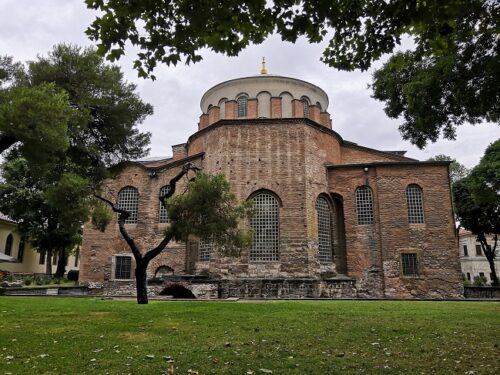
HAGIA EIRENE
You will find Hagia Eirene in the outer courtyard of Topkapi Palace. Originally built in 532, it is the oldest Christian Orthodox church in Istanbul, although it was damaged and rebuilt several times.
Remarkably, the Ottomans never converted Hagia Eirene into a mosque. However, situated within the palace walls, the Janissaries used it as a warehouse for storing and repairing military equipment. Sultan Ahmed III converted it into a National Military Museum in 1726.
Today, Hagia Eirene serves as a museum and concert hall.
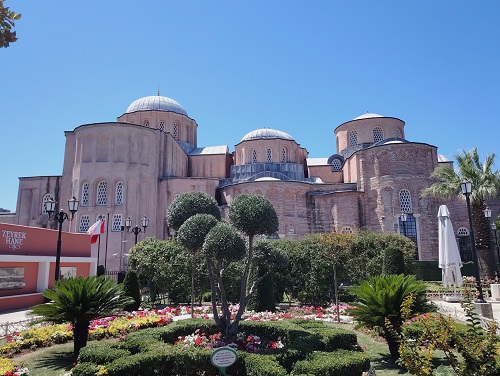
MONASTERY OF CHRIST PANTOKRATOR
After Hagia Sophia, the Monastery of Christ Pantokrator is the largest Byzantine religious complex that you can see in Istanbul. It consists of two Byzantine churches and a chapel joined together. Completed before 1136, it is the best example of middle Byzantine architecture in Constantinople.
Apart from the structure itself, nothing from Byzantine times can be seen inside today. It functions as the Zeyrek Mosque.
PAMMAKARISTOS MONASTERY
I originally tried to visit this church in 2019, when I started my travels around Turkey in Istanbul. At that time, restoration work was underway and I couldn’t see anything.
I returned in 2024 and they completed the restoration earlier that year. I also went back in 2025, but the museum in the parekklesion was still closed until further notice. The museum is actually the most interesting part of this complex. I will have to return again on my next trip to Istanbul.
The church was built between the eleventh and twelfth centuries. It continued to function as a Christian Orthodox church for 134 years after the conquest of Constantinople. Sultan Murad III converted it into a mosque in 1587. Today, this is the Fethiye Mosque.
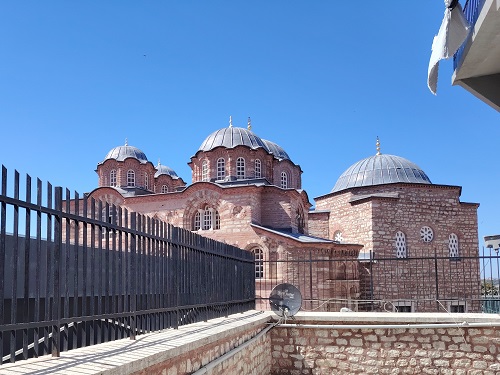
CHORA CHURCH
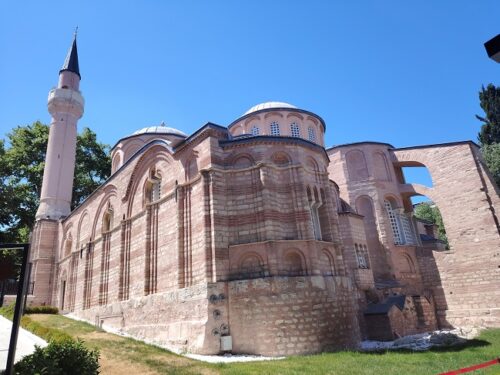
A remarkable fact about the Chora Church is that it contains some of the finest Byzantine mosaics and frescoes, which the Ottomans left untouched even though Atik Ali Pasha converted it into a mosque in 1511.
Pinpointing its exact construction date is difficult. The oldest parts date from the early fourth century, but the impressive structure that we see today emerged in the eleventh century.
Chora Church became a museum in 1945, but they re-converted it into a mosque in 2020. Today, it is the Kariye Mosque.
CHURCH OF SAINTS SERGIUS AND BACCHUS
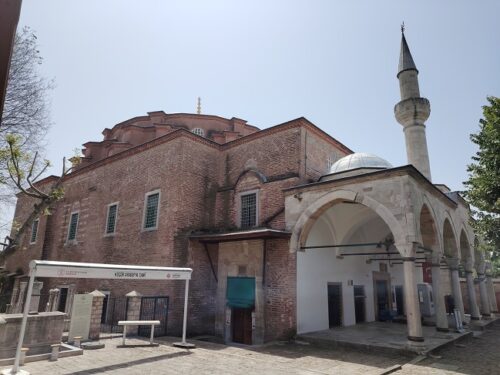
Built in 536, the Church of Saints Sergius and Bacchus is slightly older than Hagia Sophia. It’s Turkish name, Küçük Ayasofya Camii, means Little Hagia Sophia.
After the conquest of Constantinople, it continued to function as a Christian Orthodox temple for 60 years. Then, the Chief Black Eunuch Hüseyin Ağa converted it into a mosque in 1513.
Apart from the building itself, nothing survives from Byzantine times. Nevertheless, this 1489 year old structure is immensely valuable to world heritage and is a must see.
THEOTOKOS KYRIOTISSA
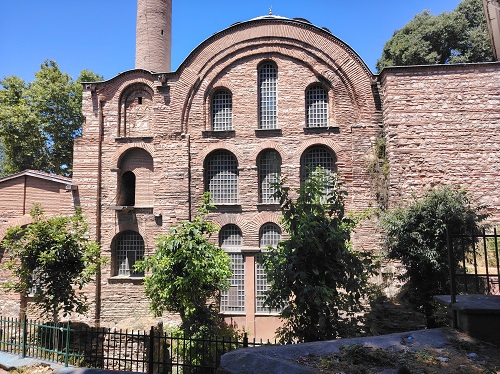
Fatih Sultan Mehmed converted Theotokos Kyriotissa into a mosque immediately after the conquest of Constantinople. Its modern name, Kalenderhane Mosque, comes from the kalenderi dervishes who used it as their Sufi lodge.
The main part of the church was built around 1200. Today, only one third of the original structure remains. You will find it near the eastern end of the Valens Aqueduct.
BYZANTINE CHURCHES IN ISTANBUL
If you want to explore Istanbul’s Byzantine heritage, you should definitely see these seven former churches. There are other former churches as well, but perhaps it is unnecessary to visit every single one. Many other Byzantine structures remain and the immense legacy of the empire still survives 572 years after the conquest.
None of these former Byzantine churches needs to function as a mosque today. There are so many mosques in Istanbul that re-converting Hagia Sophia and Chora Church was not necessary. In fact, all of them should have become museums.
That said, the authorities have clearly invested considerable effort in restoring and preserving this immensely valuable heritage, despite its Christian origin and despite being overshadowed by the Ottoman period.
In my next posts, I will write more about these remarkable buildings, as I would like to learn more about all of them.
Back to Turkey
Greetings,
December 27, 2025Where could be found exostive list of all churches converted to mosque in Konstantinopoleos.
Hello, try this link, although I don’t know if they list absolutely all former Byzantine churches – https://www.thebyzantinelegacy.com/churches
December 27, 2025