


The second largest surviving Byzantine religious structure in Istanbul, the Christ Pantokrator Church, is what links these two figures. This historic building is now known as the Molla Zeyrek Mosque.
But let’s start from the beginning.
SHORT HISTORY OF CHRIST PANTOKRATOR CHURCH
The Christ Pantokrator Church consists of two churches and an imperial chapel joined together. Byzantine Empress Eirene, wife of Emperor John II Komnenos, started construction of the monastery in 1118, to provide shelter for the poor, the sick and the suffering. She died in 1124 and, after her death, Emperor continued the work, completing the entire complex in 1136.
The Fourth Crusade occupied Constantinople from 1204 to 1261. During this period, the Pantokrator Church served as the Venetian headquarters.
After the Byzantines reconquered Constantinople in 1261, the monastery was returned to the Orthodox monks. It continued functioning as a Christian Orthodox religious centre for another two centuries.
Constantinople fell to the Ottoman army in 1453. Fatih Sultan Mehmed converted the Christ Pantokrator Church into a mosque immediately after the conquest.
This brings us to Molla Zeyrek. “Molla” in Turkish means “mullah”. Molla Zeyrek worked in the newly established Islamic centre as one of its first teachers. The mosque eventually took his name.
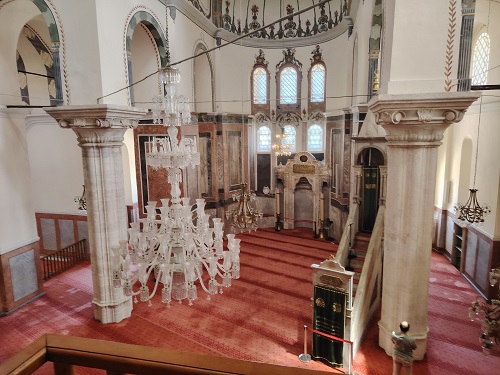
ZEYREK MOSQUE
Although I visited Istanbul many times in the past, I saw this Byzantine structure for the first time in June 2024. The building is one of the finest examples of middle-period Byzantine religious architecture. But that’s it.
Apart from this spectacular historic structure, unfortunately nothing else from the Byzantine era remains on the site. The monastery complex has completely disappeared. The former Christ Pantokrator Church, now a functioning and beautiful mosque, is the only surviving element.
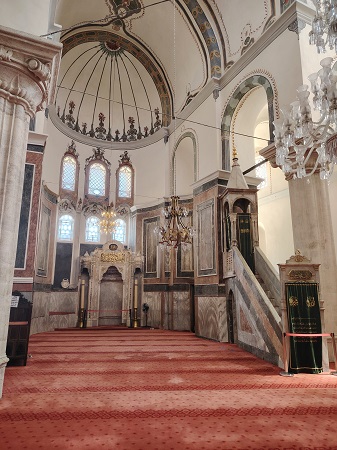
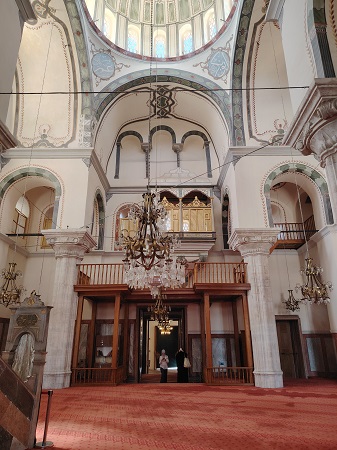
You can see the interior of the mosque in these photos. They give a good sense of what it looks like inside. Unfortunately, the opus sectile floor of the former church is now entirely covered by carpeting.
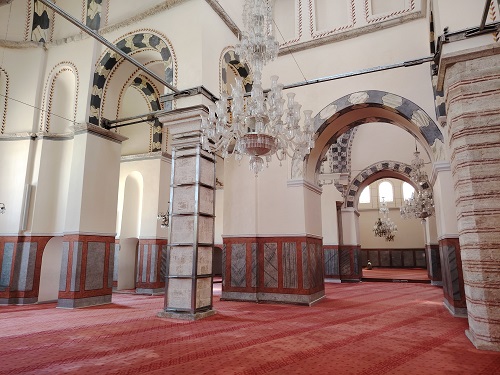
Interestingly, I was the only foreigner visiting the Zeyrek Mosque. As you can see, the mosque was almost completely empty. I mention this because places such as Hagia Sophia and Topkapi Palace are normally overflowing with tourists.
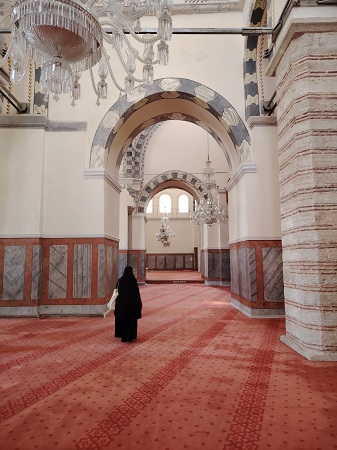
As the second largest surviving Byzantine structure after Hagia Sophia, the former Christ Pantokrator Church should be on every visitor’s list. Although, it takes a bit of effort to reach, perhaps that explains why no one else was there during my visits in June 2024 and July 2025.
One final thought. The Zeyrek Mosque would make a remarkable museum. But that will most likely never happen, as converting it would mean the mosque would cease to exist and all remaining Byzantine elements would need to be uncovered.
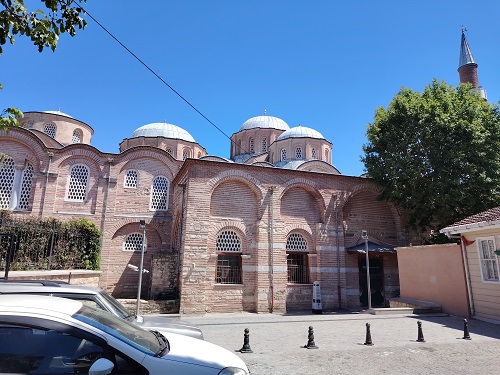
At least, the building appears well restored and carefully preserved. I can only imagine how famous this edifice might be today if it were still functioning as a Christian Orthodox religious temple.
Back to Turkey